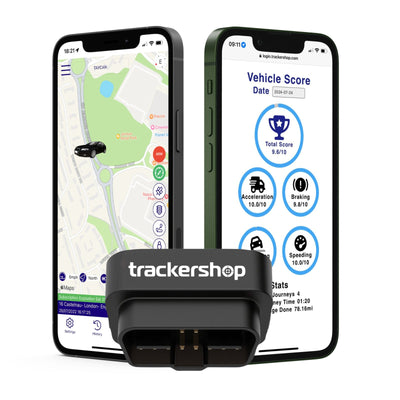
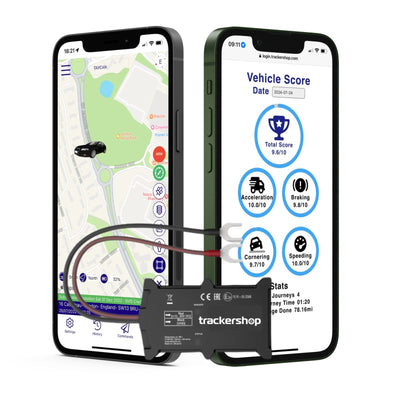
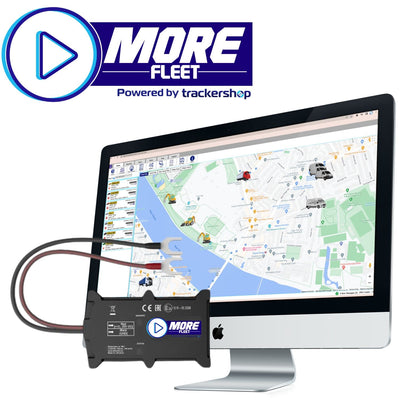
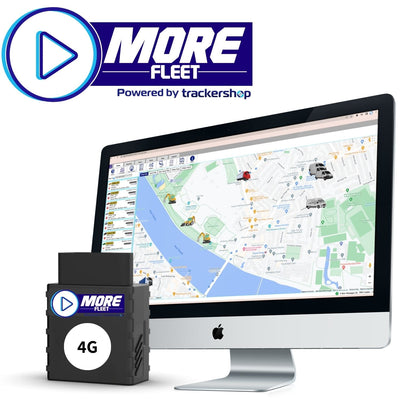
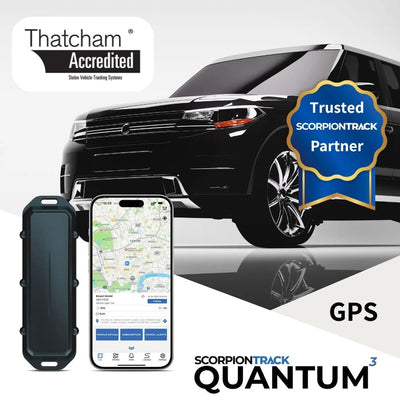
Healthcare fleet tracking shows every care vehicle on one live map, logs how long staff spend at each address, and, when connected cameras are added, keeps footage of an incident tied to the exact journey. It suits domiciliary care agencies, community nursing teams, care homes with minibuses and patient transport operators. TrackerShop puts care fleets on AutoM8, the platform built by Scorpion Automotive, part of Scorpion Group, which has made vehicle electronics since 1973. One login covers location, driving scores and connected dash cams.
Want a view of what your own fleet needs? See what your care fleet needs and a specialist will come back to you.
What can a care provider see with fleet tracking?
You can see where each vehicle is right now, when it arrived at an address, when it left and how long the journey between visits took. The map refreshes every few seconds, so a coordinator answering a worried relative or a ward manager has a real answer rather than an estimate.
- Time on site: geofences drawn around client addresses, clinics and depots stamp entry and exit automatically, with nothing written down by hand.
- Travel time: journey history replays every route, so you can compare planned rounds against what happened.
- Out-of-hours movement: an alert fires if a vehicle moves overnight or leaves an area it should stay in. For staff visiting clients alone, HSE guidance expects employers to provide supervision, monitoring and support (Health and Safety Executive, INDG73).
- Legal checks: automatic MOT and tax checks keep vehicles available for the people who depend on them.
- Evidence: a time-stamped record of each visit and journey helps show how the service runs.
Our fleet tracking for business page explains the full feature set; this page covers what matters most for care.
What does AutoM8 do for a care or patient transport fleet?
AutoM8 gives a care provider live tracking and geofencing, journey replay and fair driver scoring on its Track plan, which is live now. Fitted kit can add AI cameras, AI driver coaching and CAN bus data.
The value for care is the combination of timed visit records and a calm, fair view of driving. Pricing is per vehicle per month.
Which tool solves which problem on a care round?
Most care fleets need three things: location, a fair view of the driving, and evidence when something goes wrong. The table matches each everyday problem to the tool that handles it.
| Problem on the round | Tool | What you get |
|---|---|---|
| Clients ask when the carer will arrive | Live map and arrival times | An answer in seconds |
| Nobody can prove how long a visit lasted | Geofence entry and exit logs | Timed record per address |
| Passengers complain about a rough ride | Driver behaviour scoring | Braking, cornering and speed scored on real g-force |
| An allegation or collision with no witness | Connected dash cam | Clip linked to the journey |
| Staff driving alone at night | Movement and off-route alerts | Early warning to the office |
| A van off the road unexpectedly | Automatic MOT and tax checks | Planned downtime |
The scoring is fair to heavy vehicles: AutoM8 corrects for the vehicle's weight, so a laden minibus is not marked down for being heavy. Read more on driver behaviour scoring.
How do connected cameras help in care and patient transport?
A connected dash cam sends footage and alerts to the same platform as the tracker, so a clip is never detached from the journey it belongs to. For care fleets that means evidence for insurers after a collision, and a calm record if a complaint is made about a driver or a passenger's journey.
AutoM8 supports road-facing, rear and cab-facing cameras. The road camera can warn about following distance, lane drift and pedestrians. The cab camera can flag phone use, drowsiness and a missing seatbelt, which matters when one tired driver is carrying a vulnerable passenger. In 2025, 6,460 people were killed or seriously injured in Great Britain in collisions involving a working driver or rider (Department for Transport, 2025). Flagged events show up on the platform that day with the clip attached, and a live view is there when you need one.
Our connected dash cams for fleets page covers camera setups in full.
How do you roll out tracking across a care team?
A sensible rollout order looks like this:
- Count the vehicles and tell us the number through the quiz, so the right team handles your quote.
- Pick the fitting route. Tracking kit and cameras are fitted by Scorpion's nationwide mobile installers.
- Draw your geofences around the depot, hospital sites and the addresses you visit most.
- Brief the drivers. Explain that the system exists to protect passengers and staff, and that the scores are used for coaching.
- Review weekly. Look at late arrivals, idling and the lowest-scoring journeys, then act on them.
Where does the patient transport guide fit in?
This page is about the kit: trackers, cameras and what they show. Our patient transport fleet management guide has a different job. It covers how to run a patient transport service day to day, including punctuality, vehicle utilisation, running costs and common mistakes, and treats tracking as one input among several.
If you also look after vans that service equipment or deliver supplies, see service and maintenance fleet tracking. Care teams run by councils may prefer council and local authority fleet tracking.
What does it cost?
AutoM8 is quoted per vehicle per month. Cameras and extras change the figure, so the quote is built from your own vehicles. Support runs 24/7.
Frequently asked questions
What is the best way to track a care fleet?
Put each vehicle on a platform such as AutoM8 that reports to a live map, then draw geofences around client addresses so arrival and departure are logged automatically. Add driver scoring for passenger comfort and a connected dash cam where you need evidence.
Can fleet tracking record time spent at a care visit?
Yes. A geofence around the address stamps the moment a vehicle arrives and leaves, and journey history shows the travel in between. Coordinators get a timed record for each visit without carers filling anything in, which also helps settle disputes about how long a call lasted.
Do connected dash cams work in patient transport vehicles?
Connected dash cams record the road ahead, the rear and, if you choose, the cab, then send clips and alerts to the AutoM8 platform. Operators of patient transport vehicles use them for collision evidence and driver safety. Recording passengers needs notices and a clear data policy.
How many vehicles do I need before tracking is worthwhile?
AutoM8 suits a handful of cars up to large fleets. A single community nurse car gains from arrival logs, and larger providers gain from comparing rounds across a team. Tell us how many vehicles you run and the right team will advise.
Talk to us about your care fleet
Share your fleet size and what you want to see on each visit, and we will route you to the team that suits it.
Prefer to talk? Call 0330 055 2777.