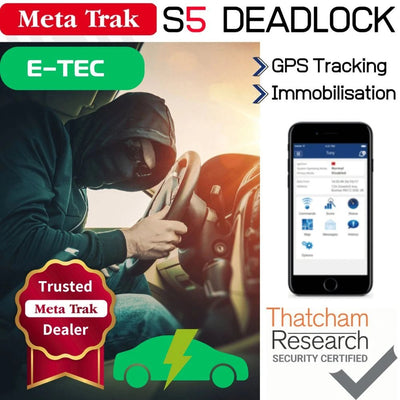
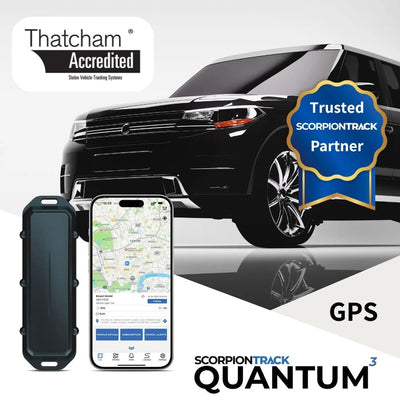
The last trip of the season is done, the water's drained and the van is tucked away until spring. For the next four or five months, nobody will be sleeping in it, and that's exactly what thieves are counting on.
Winter is when caravans and motorhomes sit unwatched for weeks at a time. Once a thief is on the move with one, the odds of getting it back are poor: an insurer's 2023 study found less than 12% of stolen caravans are recovered, and just 2% of reported thefts lead to anyone being charged (InsureMy Caravan Security Report, 2023).
These winter caravan and motorhome security tips cover what to do before you lay the van up, while it's in storage and when you visit. Tip 5 is the one owners most often skip, and it's the reason some trackers go quiet just when they're needed.
Let's start with where the van spends the winter.
1. Choose your winter storage site carefully
Visit a storage site in person before you book it, and look at it the way a thief would. Check how easy it is to get in, whether there's CCTV and staff, and whether there are hitch-lock posts or ground anchors to secure your van to.
A secure site matters because thieves rarely take one van. Once a site's security has been beaten, the police's vehicle crime unit says three or four caravans or motorhomes are often stolen in one go (NaVCIS, 2021).

Look for controlled entry, CCTV and somewhere to anchor the van.
Many owners use a site graded by the Caravan Storage Site Owners' Association (CaSSOA). Before you sign up, ring your insurer and confirm the policy covers that exact site, because some policies set rules on where a van can be stored.
2. Fit a wheel clamp and hitch lock every time
Fit a wheel clamp and a hitch lock whenever your caravan is left, even for a few days. The AA notes that a wheel clamp is the minimum insurance requirement for most caravans and should be used whenever the van is unattended (The AA).

A hitch lock on its own can be beaten in minutes, so treat the two as a pair. If the site has a hitch-lock post or ground anchor, use it too. It makes the van much harder to hook up and tow away in the dark.
Quick check: does your policy name a specific clamp or hitch lock standard? Some insurers do, and fitting the wrong one could affect a claim.
3. Secure the motorhome cab like a car
A motorhome can be driven away, so protect the cab the same way you'd protect a car. Fit a visible steering wheel lock, and keep keys, including the spare, in a signal-blocking pouch well away from your front door at home.
Many newer motorhomes are built on base vehicles with keyless entry, which means the same relay attacks used on cars can work on them. A thief doesn't need to beat the habitation door if the cab opens and starts.
4. Add an immobiliser to your motorhome
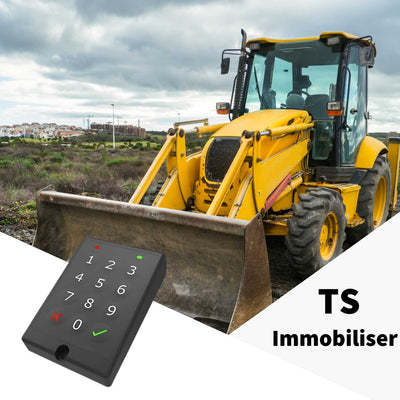
An aftermarket immobiliser stops a motorhome's engine starting until you enter your own button sequence, using controls already in the cab. If someone has cloned or relayed the key, the motorhome still won't drive away.
Immobilisers such as the Ghost range fit many popular motorhome base vehicles and work through the vehicle's own data network, so there's no box or fob for a thief to find. Check with our team which models are covered.
5. Check your tracker subscription and batteries
If your van already has a tracker, check now that the subscription is active and the app alerts are switched on. Monitoring, alerts and app tracking all need an active subscription, and police advice for storage sites says the same: if your alarm links to a tracking system, make sure the subscription is up to date (NaVCIS, 2021).

Two minutes in the app now saves a nasty surprise in spring.
Months in the cold are hard on batteries. Keep the motorhome's starter battery healthy with a trickle charger or solar panel, or a short run every few weeks, so a hardwired tracker keeps working. A battery-powered tracker doesn't rely on the van's battery at all, which suits caravans with no engine.
Did you know? Changed your phone number since last season? Tell your tracker provider, so theft alerts reach you and not your old number.
6. Take documents and valuables home
Empty the van of anything worth stealing or anything that helps a thief sell it on. That means TVs, bikes, awnings, gas bottles and, above all, paperwork such as the V5C logbook, ownership documents and spare keys.

Leaving the curtains open also helps. Anyone looking through the window can see there's nothing inside worth breaking in for.
7. Register with CRiS and mark your van
Make sure your caravan is registered to you on CRiS, the Central Registration and Identification Scheme. All new UK caravans are registered by the manufacturer, but you need to update the keeper details when you buy one, and many insurers expect it (The AA).

A roof marking can be read from a police helicopter or drone.
Visible markings make a van harder to sell on. Etch the windows with the VIN, and mark your postcode on the roof and inside lockers with a UV pen, so police can prove who owns it if it turns up.
8. Visit the van regularly over winter
Pop in every few weeks to check the van, the clamp and the locks. A regular visit means you'll spot a problem early, from a forced door to a flat battery, rather than finding it at Easter.
Ask the site to tell you about any break-ins or attempted thefts, and check your tracker app between visits. If something has moved, you want to know that day.
Fit a monitored tracker for peace of mind
A monitored GPS tracker lets you see where your caravan or motorhome is from your phone, and if it's stolen, the monitoring centre can work with the police using its live location. It doesn't stop the theft, but it gives you the best chance of getting the van back.
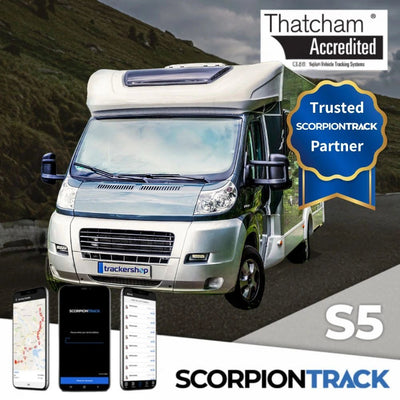
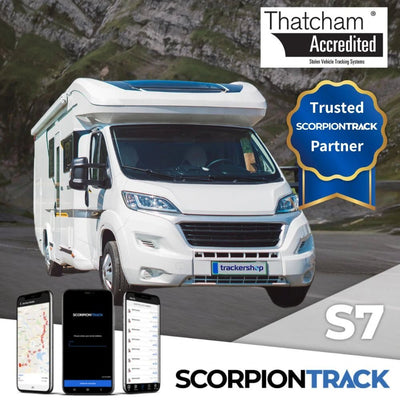
For higher-value vans, some insurers insist on a tracking device being fitted, so check your policy before you buy (The AA). Motorhome owners can also look at the ScorpionTrack S5, which alerts the monitoring centre if the vehicle moves without your Driver Recognition tag present. Compare options in our caravan and motorhome tracker range.
Layered winter security: why two or three measures beat one
The best approach combines measures that do different jobs, so a thief who gets past one still faces the next.
| Layer | What it does | Winter example |
|---|---|---|
| Habits | Makes your van a less attractive target | Secure site, valuables and documents taken home |
| Deter | Adds time and visible effort | Wheel clamp, hitch lock, steering wheel lock |
| Prevent | Stops a motorhome being driven away | Button-sequence immobiliser |
| Locate | Helps find the van after a theft | Monitored GPS tracker, subscription checked |
| Identify | Proves who owns it if it's found | CRiS registration, roof and window markings |
You don't need every layer. For most owners, a good storage site and a clamp, plus a tracker for higher-value vans, covers the main risks.
FAQs
Does my insurance cover my caravan in winter storage?
Most caravan and motorhome policies cover storage, but many set conditions, such as an approved storage site or a named wheel clamp. Check the policy wording, and tell your insurer where the van is kept, before you lay it up.
Is it safer to store a caravan at home or on a storage site?
It depends on the site and your home. A well-run site with CCTV, controlled entry and anchor points is usually safer than an open driveway, but a van on your own drive, clamped and in view of a camera, can be well protected too.
Can a tracker work on a caravan with no engine?
Yes. A battery-powered tracker runs on its own batteries, so it doesn't need the van to have an engine or a charged leisure battery. A hardwired tracker needs a healthy battery to keep working through the winter.
What is a CRiS check?
A CRiS check confirms a caravan's registered details, and whether it's recorded as stolen or written off. Run one for a small fee before buying a used caravan, and don't rely on the seller's paperwork alone.
Your winter storage checklist
Before you drop the van off, do the free things: documents, keys and valuables home, curtains open, and your insurer told where it's kept. Then fit the clamp and hitch lock, check your tracker subscription, and book a visit in your diary for a few weeks' time. If your van doesn't have a tracker yet, that's the gap to fill first.

No wiring, no engine needed
Quantum3 Self-Fit: Thatcham S7 security for your van
Quantum3 Self-Fit runs on its own batteries, so it doesn't rely on a leisure battery that's gone flat over winter. Fit it yourself, then arm it from your phone when the van goes into storage.
- Thatcham Category S7 approved*
- Battery powered with up to 3 years before you swap the batteries yourself*
- IP68 waterproof and dustproof, ready for a winter outdoors
- Arm it in the ScorpionTrack app, and if it moves while armed, our monitoring team calls you
*Must be fitted exactly as set out in the Quantum3 Self-Fit instruction guide, with a valid subscription, to keep Thatcham S7 approval. Battery life depends on use.
Not sure what suits your caravan or motorhome? Our UK team is open 7 days a week and will tell you honestly what fits your van and your insurance.