Key Takeaways GPS Tracking for Crane and Heavy Equipment Rental
• GPS tracking lets crane and heavy equipment rental firms monitor asset location, usage hours and security in real time from a single dashboard.
• Trackers cut theft losses, speed up recovery, improve utilisation rates and support accurate hire billing.
• Hardwired and battery-powered units suit different machines, from tower cranes to compact excavators.
• Geofencing, tamper alerts and engine-hour logging are the features that deliver the fastest return on investment.
• The right solution pays for itself through lower insurance premiums, fewer losses and better fleet efficiency.
GPS tracking for crane and heavy equipment rental is a telematics system that shows exactly where every asset is, how long it has been running and whether it is being used or moved without authorisation. For rental businesses managing high-value plant across multiple sites, a quality tracker is the single most effective way to reduce theft, recover stolen machines quickly and bill hire time accurately. If you run a fleet of cranes, excavators, telehandlers or dumpers, investing in reliable GPS trackers turns scattered, hard-to-monitor equipment into a fully visible, controllable fleet. Just as fleet operators rely on car trackers to protect their vehicles, plant hire firms are increasingly fitting trackers to every machine that leaves the yard.
Why crane and heavy equipment rental needs GPS tracking
Heavy plant is expensive, mobile and frequently left unattended on open sites, which makes it a prime target for organised theft. Recovery rates for stolen construction equipment are notoriously low, and a single missing telehandler or mini digger can wipe out weeks of hire profit. GPS tracking closes that gap by giving you a live location fix and an audit trail of every movement.
Beyond security, rental margins depend on knowing where your assets are and how hard they are working. A machine sitting idle on a customer site is lost revenue, while an over-run hire that goes unbilled is money left on the table. Tracking removes the guesswork.
Key benefits for plant hire businesses
Theft prevention and rapid recovery. Real-time positioning and instant movement alerts mean you know the moment a machine leaves a site it should not, and you can pass precise coordinates to police for recovery.
Accurate hire billing. Engine-hour and usage logging lets you bill on genuine machine time rather than estimates, protecting your margins and giving customers transparent invoicing.
Better utilisation. Fleet-wide visibility shows which assets are earning and which are idle, so you can redeploy underused kit instead of buying or hiring in.
Lower insurance costs. Many insurers offer reduced premiums on tracked plant, and some high-value machines are difficult to insure at all without an approved tracking device fitted.
Maintenance scheduling. Engine hours feed directly into service intervals, helping you keep machines compliant and reducing costly unplanned downtime.
Features that matter most
When choosing a system, prioritise the functions that protect revenue and assets:
• Geofencing: set a virtual boundary around a site or yard and get an alert if a machine crosses it.
• Tamper and low-power alerts: know immediately if a unit is disconnected or a battery is failing.
• Engine-hour monitoring: track true usage for billing and servicing.
• Real-time and historical reporting: see live positions and review full journey history.
• Long battery life: essential for machines without a permanent power supply.
The best platforms bring all of this into one dashboard, so managing a mixed fleet of cranes, dumpers and diggers is no harder than managing a handful of company vehicles. If you already use GPS trackers on your vans and cars, extending the same approach to your plant fleet gives you a single, joined-up view of every asset you own.
Hardwired versus battery-powered trackers
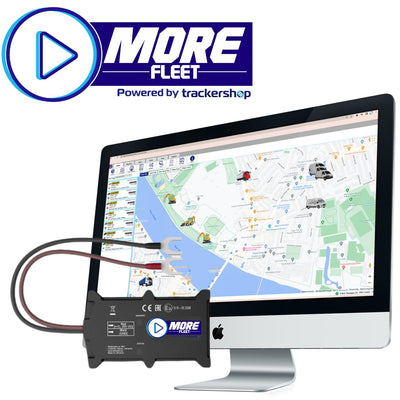
Two broad categories suit heavy equipment. Hardwired trackers draw power from the machine and are ideal for cranes, excavators and other plant with a permanent 12V or 24V supply. They run continuously and can report engine status directly. Battery-powered trackers are self-contained and better suited to trailers, attachments and machines that are frequently disconnected or stored, offering long standby life and discreet fitting.
Many rental fleets run a mix of both, matching the device to each asset type. The right blend depends on your fleet composition, how assets are powered and how often they move between sites.
Choosing the right tracking partner
Look for a supplier with proven experience in plant and fleet applications, robust hardware built for harsh site conditions, and a reliable platform with responsive support. Approved, insurance-recognised devices carry more weight with insurers and offer better protection for high-value machines. It is also worth checking network coverage, subscription costs and how easily the system scales as your fleet grows.
Whether you are protecting a single tower crane or a nationwide fleet of excavators, the principles are the same ones that make car trackers indispensable for vehicle fleets: visibility, security and control. Fitting quality GPS trackers across your equipment is one of the smartest investments a rental business can make, paying for itself through reduced losses, lower premiums and a fleet that works harder for you.
Frequently asked questions
Can GPS trackers work on machines with no permanent power?
Yes. Battery-powered trackers are designed for exactly this, offering long standby life and discreet fitting on attachments, trailers and stored plant.
Will a tracker lower my insurance premium?
Often, yes. Many insurers offer discounts for approved tracking devices, and some high-value machines require a tracker as a condition of cover.
How accurate is heavy equipment GPS tracking?
Modern systems provide location accuracy to within a few metres, with real-time updates and full historical journey data.