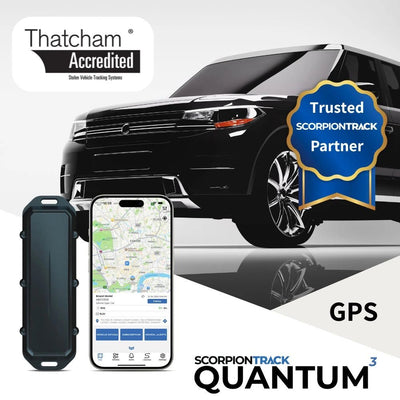
Key Takeaways For Trackers That Work Underground or in Car Parks
• Direct line of sight is crucial: Standard satellite signals cannot penetrate thick concrete, earth, or steel, meaning tracking drops in subterranean locations.
• Data is never truly lost: Most modern devices use data buffering to record movements during signal blackouts, uploading the history once the connection is restored.
• Cellular network backup: When satellite connections fail, many devices switch to LBS (Location-Based Services) using mobile phone masts to provide an approximate location.
• Alternative technologies exist: Premium security systems often incorporate Radio Frequency (RF) alongside standard tracking to find vehicles hidden in signal dead zones.
• Device quality matters: Choosing high-quality hardware ensures better signal retention and faster reconnection times when emerging from tunnels or garages.
If you are wondering whether standard satellite technology works deep underground or inside multi-storey concrete car parks, the short answer is no. Because satellite signals rely on a direct line of sight to the sky, thick barriers like concrete, earth, and metal effectively block the connection, causing the live feed to drop temporarily. However, this temporary loss of signal does not mean your vehicle is completely unprotected, as modern devices use clever backup systems like data buffering and cellular triangulation to fill in the blanks. To ensure you have a device equipped with these advanced fail-safes, you should explore a professional range of GPS Trackers tailored to your specific security needs.

The Science Behind the Signal
To understand why a subterranean environment causes issues, we must first look at how the technology operates. A tracking unit in your vehicle communicates with a network of at least 24 satellites orbiting the Earth. The device needs to receive signals from a minimum of four of these satellites to calculate its precise location, speed, and direction.
These satellite signals are actually quite weak by the time they reach the Earth's surface. They easily travel through the atmosphere, glass, and thin plastics. However, dense materials absorb or reflect these radio waves, completely breaking the connection between your vehicle and the sky.
The Faraday Cage Effect
Concrete car parks, underground facilities, and metal shipping containers often act as a 'Faraday cage'. This is an enclosure made of conductive material that blocks external static and non-static electric fields. When your vehicle enters one of these structures, the satellite waves simply bounce off the exterior.
This physical limitation applies to all satellite-based navigation. You have likely noticed your mobile phone's navigation app freezing or losing your location when you drive through a long tunnel. The exact same principle applies to standard GPS Trackers.
What Happens During a Signal Blackout?
A sudden loss of satellite connection can sound alarming, especially if you rely on the device for theft prevention. Fortunately, manufacturers anticipate these environmental challenges. High-quality devices are built with intelligent computer processors designed to handle signal interruptions seamlessly.
Intelligent Data Buffering
When a tracker loses its satellite connection, it does not simply shut down. Instead, it enters a logging mode. The device uses its internal memory to store its last known location, its speed upon entering the blind spot, and the time the signal dropped.
As soon as the vehicle emerges from the underground car park and regains a clear view of the sky, the device instantly uploads this buffered data to the secure server. On your tracking app, the missing segment of the journey will quickly populate, ensuring you maintain a complete history of the vehicle's movements.
Cellular Network Triangulation (LBS)
Many premium GPS Trackers also feature a backup location method known as Location-Based Services (LBS). While the satellite signal might fail, the device's internal SIM card may still be able to connect to nearby mobile phone masts.
By measuring the signal strength from multiple cell towers, the device can estimate its location. While this triangulation is much less precise than a satellite fix often narrowing the location down to a few hundred metres rather than a few metres it provides vital clues about the vehicle's general whereabouts. If you want to benefit from these intelligent fallback features, make sure to upgrade your security by viewing our reliable GPS Trackers today.
Advanced Technologies for Underground Recovery
While data buffering and LBS are excellent for fleet management and general journey logging, they are sometimes insufficient for stolen vehicle recovery. Thieves frequently hide stolen cars in metal shipping containers or underground lock-ups specifically to block satellite signals. To combat this, security experts use multi-layered tracking systems.
Radio Frequency (RF) Technology
Thatcham-approved security devices often combine standard satellite tracking with Radio Frequency (RF) or VHF technology. RF signals operate on a completely different frequency band and wavelength. Unlike weak satellite signals, RF waves can penetrate concrete walls, steel doors, and underground structures.
If a vehicle goes missing and the standard signal drops, the monitoring centre can activate the dormant RF beacon. Police and recovery teams then use specialised handheld receivers to track the RF signal. They follow the signal strength directly to the hidden vehicle, entirely bypassing the need for a clear view of the sky.
Bluetooth and Wi-Fi Sniffing
Some newer tracking modules also incorporate Bluetooth and Wi-Fi positioning. If the vehicle is parked in a large underground facility that provides public Wi-Fi, the tracker can identify nearby routers. By checking these router addresses against a global database, the device can pinpoint its location indoors.
While this technology is more commonly used in asset tracking for warehouses, it is slowly making its way into the automotive sector. It provides yet another layer of redundancy when the primary satellite connection fails.
Real-World Scenarios: Managing Expectations
Understanding the limitations and capabilities of your equipment helps you manage your security expectations. If you park your car in a subterranean facility every night, you will consistently see a loss of live tracking until you drive out the next morning.
This routine signal drop is perfectly normal and should not trigger panic. The device will automatically log its last position precisely at the entrance of the car park. If the vehicle is moved without authorisation while underground, the device's internal motion sensors will still trigger a silent alarm, alerting the control centre the moment it connects to a cellular network.
Fleet Management Considerations
For business owners managing a fleet of vans or lorries, signal drops in tunnels and loading bays are everyday occurrences. When reviewing driver routes, you might occasionally see straight lines drawn across the map where a tunnel was navigated.
Fleet managers must choose robust hardware that reconnects to satellites rapidly after exiting a tunnel. Cheaper units can sometimes take several minutes to establish a new "cold fix", resulting in inaccurate route data. Investing in high-grade equipment ensures these blind spots remain brief and well-documented.
Conclusion: Ensuring Continuous Protection
While standard satellite signals cannot physically penetrate the dense concrete of underground car parks or the steel of shipping containers, this does not render your security system useless. Through a combination of intelligent data buffering, cellular triangulation, and advanced Radio Frequency backups, modern security devices are highly resilient. They are engineered specifically to overcome these environmental obstacles and keep your assets visible.
Do not let the physical limitations of satellite technology deter you from protecting your vehicle. By choosing a sophisticated, multi-layered device, you ensure your car remains protected even in the most challenging environments. To secure your vehicle with industry-leading technology that fights back against signal blockers and dead zones, explore our full range of premium GPS Trackers and take control of your vehicle's safety.